


TOKYO –
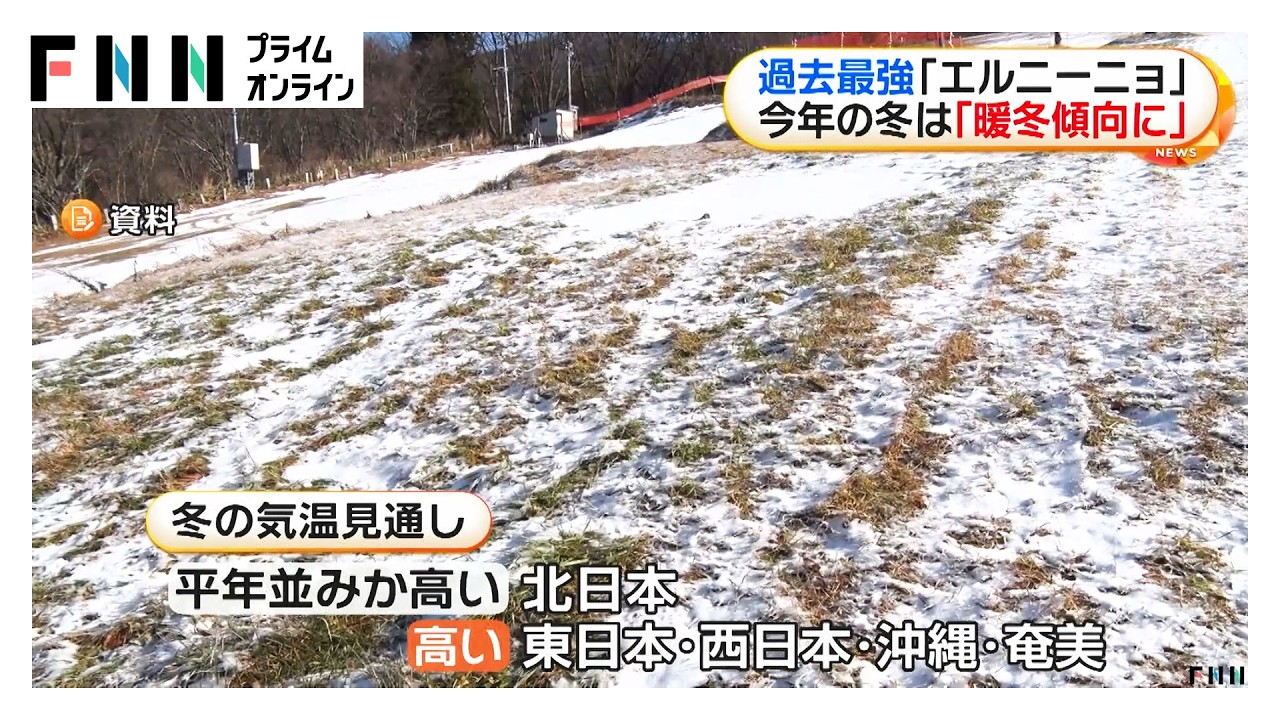
Japan is predicted to expertise a warmer-than-normal winter because the El Nino phenomenon at the moment affecting the Pacific Ocean has reached its strongest stage on report, with the Japan Meteorological Agency saying on October tenth that unusually excessive sea floor temperatures are more likely to persist by the approaching winter months.
The company reported that sea floor temperatures in September within the El Nino monitoring area off the coast of Peru in South America had been 4 levels Celsius above the reference stage, the most important constructive deviation recorded since observations started. The exceptionally excessive temperatures point out that the present El Nino has surpassed earlier episodes in depth.
El Nino, which entails an irregular warming of floor waters within the central and jap equatorial Pacific, is thought to be one of many elements contributing to uncommon climate patterns worldwide. The phenomenon influences atmospheric circulation, affecting temperatures, precipitation and storm growth throughout completely different areas.
Masayuki Kyoda, director of the JMA’s Atmosphere and Ocean Department, mentioned historic observations point out that Japan tends to expertise hotter winters throughout El Nino occasions. “Looking at past El Nino events, winters in Japan have tended to be warmer than normal,” he mentioned.
According to the company’s newest outlook, the present circumstances are anticipated to proceed by winter, with the chance of El Nino persisting estimated at 100% for the forecast interval. Sea floor temperature anomalies have remained notably pronounced because the summer time, with August and September exhibiting exceptionally excessive readings.
The company forecasts that temperatures in northern Japan will likely be close to or above seasonal averages, whereas jap and western Japan, Okinawa and the Amami Islands are anticipated to expertise above-normal temperatures.
The outlook for October by December additionally means that comparatively heat atmospheric circumstances will persist throughout a lot of the nation. Changes within the place of the prevailing westerly winds are anticipated to affect climate patterns, though the shift isn’t forecast to be sturdy sufficient to carry unusually intense outbreaks of chilly air.
Precipitation in the course of the three-month interval is predicted to be close to or barely above regular, partly as a result of disturbances alongside the prevailing westerly wind belt may produce intervals of unsettled climate. This might lead to frequent adjustments between a number of days of clear skies and spells of rain.
Despite the final warming pattern, the company cautioned that the arrival of colder air from late November into December may nonetheless carry intervals of considerable snowfall, notably alongside the Sea of Japan coast. A hotter seasonal outlook due to this fact doesn’t essentially imply that particular person chilly spells or heavy snow occasions will likely be absent.
The unusually highly effective El Nino might have already got influenced Japan’s climate in the course of the summer time. Changes in atmospheric circulation related to the phenomenon are thought-about a attainable contributing issue to the massive variety of typhoons that developed in August.
A complete of 10 typhoons fashioned throughout August, an unusually excessive quantity for a single month. The company steered that the power of El Nino might have not directly altered atmospheric circumstances in ways in which favored tropical cyclone growth round Japan and the western Pacific.
El Nino’s affect on tropical cyclone exercise is complicated, with adjustments in atmospheric circulation doubtlessly affecting the place storms type and the way they develop. The exceptionally sturdy circumstances noticed this 12 months may due to this fact proceed to affect climate patterns past the instant winter temperature outlook.
With the phenomenon anticipated to stay sturdy over the approaching months, Japan faces the prospect of persistently above-average temperatures, fluctuating precipitation patterns and continued climate variability, at the same time as occasional chilly outbreaks carry extra typical winter circumstances to elements of the nation.
Source: FNN