


TOKYO –
Japanese drone producer Terra Drone has delivered interceptor drones to Ukraine’s Ministry of Defense for the primary time, prompting Russia to threaten retaliatory measures on October 21, as Japan considers increasing home drone manufacturing and strengthening its coastal defenses by way of hundreds of unmanned plane.
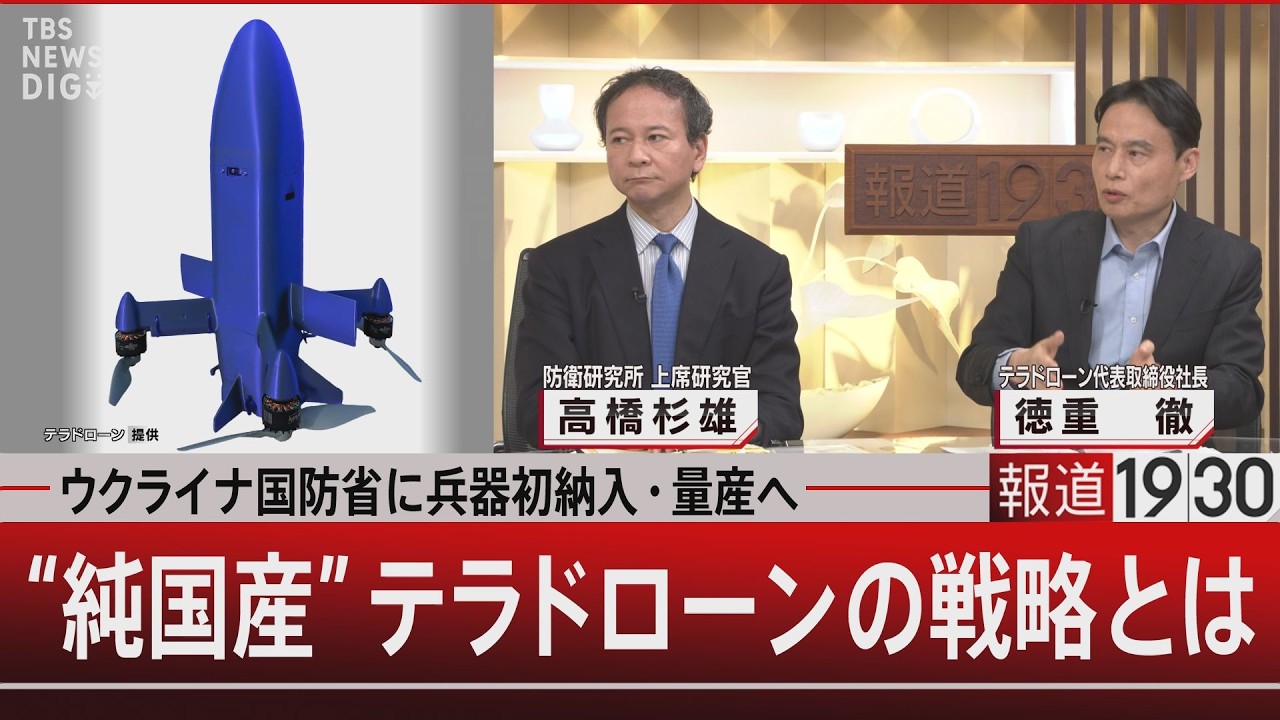
The Tokyo-based firm introduced on October 14 that it had equipped small interceptor drones to Ukraine’s Defense Procurement Agency by way of a neighborhood subsidiary, marking a brand new stage in its involvement within the nation’s protection trade. Terra Drone had beforehand equipped gear on to Ukrainian navy models, however the newest supply represents its first formal procurement association with the Ukrainian authorities.
Russian Foreign Ministry spokeswoman Maria Zakharova condemned the corporate’s actions on October 21, describing the supply as an overtly hostile and unacceptable act regardless of repeated Russian warnings. Moscow additionally indicated that the motion wouldn’t go unanswered.
Terra Drone President Toru Tokushige mentioned the corporate had anticipated such criticism when it entered the protection trade in September 2025. He famous that Russia had beforehand singled out the corporate following its funding in a Ukrainian drone producer about six months earlier, making the newest condemnation its second direct warning.
Japan’s Defense Minister Shinjiro Koizumi defended the corporate’s actions on October 23, declaring that Russia itself is without doubt one of the world’s main arms exporters. He mentioned Japanese non-public corporations ought to face no objection so long as their operations adjust to the legislation.
Terra Drone has quickly expanded its Ukrainian operations since getting into the protection sector. Tokushige has visited Ukraine roughly 15 instances, buying native producers and dealing instantly with navy models to develop gear suited to precise battlefield situations. The firm now has three subsidiaries in Ukraine and has established manufacturing capability exceeding 10,000 drones yearly.
One of its principal merchandise is the Terra A1, an interceptor developed collectively with a Ukrainian firm to destroy incoming Russian assault drones, together with the Iranian-designed Shahed plane extensively utilized by Russian forces. The Terra A1 can attain speeds of round 300 kilometers per hour and prices roughly 480,000 yen per unit to fabricate.
The comparatively low manufacturing value has been achieved partly by way of using 3D printing, permitting elements to be manufactured rapidly and effectively. The plane has undergone repeated enhancements based mostly on fight expertise, following a growth course of through which gear is examined and modified instantly on the battlefield.
Terra Drone acquired one other Ukrainian drone firm in June, increasing its means to develop interceptor programs for various navy necessities. In August, it additionally concluded a mass-procurement settlement with Japan’s Acquisition, Technology and Logistics Agency, with deliveries to the Self-Defense Forces starting in September.
The firm’s Ukrainian-made interceptors are manufactured regionally, an association meant to keep away from restrictions beneath Japan’s laws governing protection gear transfers to international locations concerned in armed battle.
The newest drones equipped to Ukraine’s Defense Procurement Agency differ from the bigger interceptors designed to destroy Shahed plane. They are smaller programs meant for frontline operations in areas Ukrainian forces describe as “kill zones,” the place Russian reconnaissance drones, explosive-laden first-person-view plane and cheap fixed-wing assault drones current a continuing menace.
According to Tokushige, the smaller interceptors have been designed to journey roughly 50 kilometers per hour quicker than the FPV drones they’re meant to destroy. Their effectiveness relies upon not solely on pace but additionally on reliability and ease of meeting beneath battlefield situations.
One of Terra Drone’s Ukrainian companions, Clean Technology, provides gear utilized by Ukraine’s Third Army Corps. Tokushige mentioned fast deployment is especially necessary as a result of troopers assembling gear close to the entrance line danger being detected and attacked by Russian drones. Poorly manufactured programs can require a further 10 to half-hour of preparation, doubtlessly exposing their operators to hazard.
Ukraine’s navy procurement system has additionally accelerated technological growth. Unlike Japan, the place protection gear is mostly bought by way of centralized procurement procedures, Ukrainian navy models can purchase drones instantly from producers in accordance with their operational wants.
Ukraine has launched a points-based system that rewards models for battlefield achievements, permitting them to buy gear by way of a web based navy market. Approved navy personnel can choose drones from competing producers, creating direct competitors over value, efficiency and reliability.
This strategy has inspired producers to scale back prices and quickly incorporate battlefield suggestions into their merchandise. While typical protection procurement can take a yr or longer, Ukrainian models typically request modified gear inside two weeks or a month.
Tokushige mentioned the decentralized system allows particular person producers to work intently with specific models, producing simultaneous technological enhancements throughout completely different areas and purposes. Equipment can bear substantial modifications each three months, requiring corporations and element suppliers to keep up extremely versatile growth processes.
The unfold of drone warfare can also be reworking Europe’s industrial technique, the place governments are encouraging cooperation between automotive producers and protection corporations to develop navy manufacturing.
French automaker Renault has introduced partnerships with two protection corporations concerned in drone manufacturing, whereas German automotive provider Schaeffler has entered comparable preparations with German and French protection producers.
The partnerships are meant to capitalize on extra manufacturing capability in Europe’s automotive trade, which faces rising competitors from Chinese electrical and hybrid autos and modifications related to the transition towards lower-carbon transportation.
At the identical time, European protection producers face shortages of expert employees as Russia’s invasion of Ukraine continues to drive demand for navy gear.
Paul Taylor, a France-based researcher specializing in European protection and safety, mentioned automotive corporations can contribute manufacturing experience, manufacturing services and educated employees to the protection trade.
Under the rising preparations, car producers can use present services to mass-produce drone airframes, leaving protection corporations to put in explosives, digital controls and different specialised gear at separate areas.
One French protection producer expects its manufacturing of one-way assault drones to extend from roughly 100 models in 2026 to 12,000 in 2027 by way of cooperation with Renault, representing a 120-fold improve.
European governments are enjoying an energetic position in encouraging such partnerships. Germany’s protection and financial ministries organized a joint trade summit in late 2025, resulting in the creation of a digital platform that enables automotive and protection corporations to establish potential manufacturing companions.
Companies can use the system to promote manufacturing capabilities, technical necessities and alternatives for cooperation. Some European governments are additionally providing relocation help to automotive employees going through manufacturing facility closures, whereas public funding helps retraining and expertise growth.
NATO Secretary-General Mark Rutte has urged member international locations to organize broader industrial manufacturing capabilities, together with their automotive sectors, for conditions requiring a fast enlargement of protection manufacturing.
Japan possesses comparable manufacturing experience, significantly by way of its main car corporations, however faces completely different industrial and political obstacles.
According to Tokushige, partnerships between automotive and protection producers have change into more and more widespread in Europe, the place governments regard navy manufacturing as each a safety precedence and a possibility to protect industrial employment.
He mentioned Japanese corporations stay extra reluctant to publicize their involvement in protection initiatives due to issues about company fame and industrial relationships, significantly with China.
For smaller know-how corporations, participation in protection initiatives can display the standard of their merchandise. Larger producers, nevertheless, should think about how defense-related actions may have an effect on their established shopper companies and abroad operations.
Tokushige mentioned Japanese public attitudes towards the protection trade stay considerably completely different from these in Europe. He ceaselessly encounters questions concerning the ethics of producing income from navy gear, reflecting Japan’s longstanding dedication to pacifism and its postwar custom of completely defense-oriented safety coverage.
The dialogue has change into more and more necessary because the Defense Ministry prepares to develop the Self-Defense Forces’ use of unmanned programs.
Japan possessed roughly 2,500 navy drones on the finish of March 2026, significantly fewer than the numbers being produced and deployed by Ukraine and Russia. The United States has additionally accelerated its growth of unmanned navy gear, with figures mentioned within the Japanese protection debate reaching roughly 200,000 plane.
The Defense Ministry has outlined plans for a coastal protection system involving giant numbers of drones, typically described as a coastal protect, meant to stop hostile forces from approaching or touchdown on Japanese territory.
The initiative types a part of Japan’s broader effort to remodel the Self-Defense Forces into a company able to making intensive use of unmanned belongings. Officials are anticipated to think about additional enlargement when the nation’s three principal nationwide safety and protection coverage paperwork are revised.
Defense analyst Sugio Takahashi of the National Institute for Defense Studies mentioned unmanned programs would change into important not just for defending Japan’s distant islands but additionally for compensating for the nation’s declining inhabitants.
He warned that the variety of obtainable Self-Defense Forces personnel may fall to roughly 60% of present ranges over the following 20 years. Maintaining or enhancing protection capabilities with fewer personnel would require higher reliance on synthetic intelligence and unmanned know-how.
The problem, nevertheless, extends past buying plane. Japan should develop a home manufacturing base able to producing giant numbers of drones and repeatedly enhancing their capabilities.
Takahashi argued that navy procurement alone can be inadequate to maintain such an trade. Once the federal government accomplished a significant acquisition program, orders may decline sharply, leaving producers with costly manufacturing services and inadequate enterprise.
He mentioned Japan would due to this fact must develop civilian drone purposes, together with infrastructure inspection, safety, logistics and surveillance, to generate secure demand between protection procurement cycles.
Current home drone demand is estimated at barely greater than 60,000 models yearly, with authorities coverage searching for to boost the determine to roughly 140,000 by 2030. Around 14 billion yen has been allotted to initiatives supporting the event of a stronger home trade.
Takahashi instructed that safety certification necessities may assist encourage the adoption of Japanese-made drones and elements with out introducing direct import restrictions that may battle with worldwide commerce commitments.
The United States has adopted a extra restrictive strategy towards Chinese know-how. Measures launched in December 2025 sought to restrict new approvals and gross sales of foreign-made drones and elements, significantly these related to Chinese producers.
Tokushige mentioned the American coverage had created demand for various suppliers, encouraging home producers of motors, batteries and different important elements to enter the market.
He argued that Japan ought to undertake the same technique by introducing domestic-content necessities into protection procurement contracts.
European governments have pursued one other mannequin, buying gear from home drone startups and supplying it to Ukraine, thereby establishing substantial demand whereas supporting nationwide protection industries.
Tokushige mentioned such government-backed orders had enabled European startups to develop manufacturing and entice element suppliers. He pointed to European procurement preparations favoring gear with a considerable proportion of elements sourced from Europe and Ukraine, together with a benchmark of roughly 65%.
For Japan, he proposed requiring a big share of drone elements to be manufactured domestically, or introducing particular necessities for essential components reminiscent of batteries, motors and flight controllers.
He argued that a very powerful problem was not assembling full plane, which requires comparatively easy manufacturing methods, however growing the community of specialised suppliers wanted to repeatedly enhance their efficiency.
A typical drone, he mentioned, incorporates round 20 principal elements, far fewer than the roughly 30,000 components utilized in an car. Japan due to this fact possesses a lot of the manufacturing functionality required to develop a home provide chain, offered corporations obtain enough orders to justify funding.
The issue is already obvious amongst smaller Japanese element producers.
Goko Denko, a specialist motor producer based mostly in Fujimi, Nagano Prefecture, has begun growing drone motors utilizing domestically sourced magnetic supplies to scale back reliance on Chinese uncommon earths.
The firm employs roughly 60 folks and has expertise manufacturing specialised motors for aviation, medical gear and agricultural equipment.
Its newest growth mission started in September 2025 following requests from Japanese drone producers searching for elements much less weak to abroad provide disruptions.
China’s tightening of rare-earth export restrictions has elevated issues amongst Japanese producers as a result of typical high-performance electrical motors generally depend on neodymium magnets and different supplies equipped by way of Chinese-controlled manufacturing networks.
Goko Denko is making an attempt to switch these supplies with domestically produced ferrite magnets.
Although ferrite is less complicated to supply inside Japan, its magnetic energy is significantly weaker than neodymium, creating engineering difficulties in reaching enough motor energy.
The firm has modified its motor design to make extra environment friendly use of the weaker magnetic discipline, however testing has proven that additional enhancements are needed.
The industrial problem is equally important. Developing a motor for large-scale manufacturing can require new manufacturing molds costing tens of tens of millions of yen, and the funding turns into tough to justify with out assured orders.
Goko Denko’s administration mentioned secure demand and clear manufacturing forecasts can be important to persevering with growth. Although the federal government has recognized drones as an necessary strategic trade, the home element provide chain stays at an early stage.
Tokushige warned that extreme dependence on abroad components may undermine Japan’s means to maintain navy operations throughout a regional emergency.
He mentioned Japanese producers presently rely closely on elements sourced from Taiwan in addition to China, elevating issues that provides may very well be interrupted throughout a battle involving Taiwan or the encircling area.
In such circumstances, he argued, Japan may lose entry to important components exactly when its protection forces wanted to extend drone manufacturing and change gear misplaced in fight.
The challenge will not be restricted to the preliminary manufacturing of plane. Tokushige mentioned home suppliers can be essential to repeatedly enhancing navy gear as operational situations modified.
He famous that Ukrainian producers typically modify drone designs each three months, requiring corresponding modifications to motors, management programs and different elements. Depending on abroad suppliers would make such fast growth harder throughout a battle.
Tokushige acknowledged that home manufacturing would usually be costlier than utilizing Chinese components. As an illustrative comparability, he estimated {that a} element costing 10,000 yen in China may cost a little 30,000 yen in Taiwan or roughly 50,000 yen in Europe or Japan.
Nevertheless, he argued that provide safety justified the extra expense. An interceptor drone costing between 400,000 and 500,000 yen with imported components may cost a little considerably extra if manufactured utilizing European or American provide chains, doubtlessly reaching 2 million to three million yen.
Takahashi agreed that the related value comparability shouldn’t be restricted to drones from completely different international locations. Interceptors should even be evaluated in opposition to typical missile-based air protection programs, which may be significantly costlier to function in opposition to giant numbers of cheap hostile plane.
However, he cautioned that Japan couldn’t afford to delay the introduction of urgently wanted navy gear till fully home options turned obtainable.
The Self-Defense Forces should develop their unmanned capabilities inside a restricted interval, and home suppliers don’t but supply enough portions of confirmed navy gear.
Takahashi mentioned Japan would want to stability instant procurement necessities with longer-term industrial growth, progressively rising home content material as producers established dependable manufacturing capability.
Tokushige argued that the method ought to transfer significantly quicker. Smaller suppliers typically require orders for 1,000 or 10,000 models earlier than committing to manufacturing, whereas the funding wanted to fabricate every main element can attain roughly 50 million yen.
He mentioned Japan’s present help packages, together with the Small Business Innovation Research framework, typically function over durations of a number of years, whereas the quickly altering navy know-how surroundings requires a lot quicker selections.
From his expertise in Ukraine, Tokushige instructed that growth and procurement help must be concentrated into durations as brief as one yr.
He additionally raised issues concerning the scale of potential drone assaults on Japan.
Based on info gathered from protection trade contacts, Tokushige instructed that China and North Korea may already possess substantial numbers of Shahed-type assault drones, doubtlessly numbering between 100,000 and 200,000. These figures had been introduced as estimates fairly than confirmed inventories.
He mentioned Ukraine’s expertise indicated that three to 5 interceptor drones is perhaps required to defend in opposition to every incoming assault drone. Under a hypothetical state of affairs involving 200,000 hostile plane and 5 interceptors per goal, Japan may require as many as a million defensive drones.
The estimate illustrates the potential scale of future necessities fairly than a confirmed authorities procurement goal.
Takahashi emphasised that Japan’s protection trade would additionally want a sustainable civilian market. Military orders may initially present a number of years of help for home producers, however civilian purposes would in the end decide whether or not manufacturing services remained economically viable.
He instructed that unused or ageing navy drones may finally be transferred into civilian purposes the place applicable, serving to preserve demand and prolong the usefulness of producing capability.
The debate additionally highlighted differing views over how a lot of Japan’s drone trade must be domestically self-sufficient.
Some contributors argued that Japan ought to cooperate extra intently with like-minded international locations fairly than making an attempt to fabricate each element independently. Shared manufacturing services, element provide chains and export markets may scale back prices whereas permitting companions to specialise in completely different applied sciences.
Such an strategy would require dependable worldwide relationships and confidence that essential provides would stay obtainable throughout an emergency.
Others maintained that the rising unpredictability of worldwide politics made home manufacturing extra necessary, significantly for elements important to nationwide protection.
The dialogue additionally raised questions on whether or not an enlargement of navy drone manufacturing may speed up a global arms race.
As synthetic intelligence turns into more and more built-in into unmanned plane, future programs could achieve the power to establish and assault targets with diminishing human involvement, creating new moral and safety challenges.
Concerns had been expressed that governments may change into more and more centered on increasing manufacturing with out establishing satisfactory safeguards governing using autonomous weapons.
Japan’s protection trade due to this fact faces competing pressures: quickly rising navy readiness, decreasing dependence on doubtlessly weak abroad suppliers, sustaining financial competitiveness and preserving the nation’s longstanding dedication to defensive safety insurance policies.
For Terra Drone, the battle in Ukraine has offered a possibility to develop and take a look at new gear beneath operational situations, whereas demonstrating the pace at which drone know-how can evolve when producers work instantly with navy customers.
For Japanese policymakers, the bigger problem is whether or not the nation’s superior manufacturing capabilities may be mobilized rapidly sufficient to create a sustainable home drone trade with out undermining the financial and safety relationships on which Japan continues to rely.
Source: TBS