


TOKYO –
A protracted-running authorized battle between two almost equivalent Japanese mascots, Chiitan and Shinjo-kun, is heading to the Supreme Court after the town of Susaki in Kochi Prefecture introduced on October 21 that it had appealed a ruling ordering it to pay 18.87 million yen in damages to the operator of Chiitan.
Shinjo-kun, the official mascot of Susaki, was created in 2013 and have become a preferred native character, attracting crowds at procuring districts and public occasions. Its reputation grew nationwide after it gained the Yuru-Chara Grand Prix in 2016, a contest celebrating Japan’s regional promotional mascots.
Chiitan, in the meantime, was launched in 2017 as an formally acknowledged character of the Akihabara Tourism Promotion Association in Tokyo. The two mascots bear a hanging resemblance to one another, having been created by the identical designer.
Initially, the characters maintained pleasant relations and even appeared collectively at promotional occasions. However, their relationship regularly deteriorated after Chiitan started posting more and more excessive movies on social media, elevating issues amongst officers in Susaki.
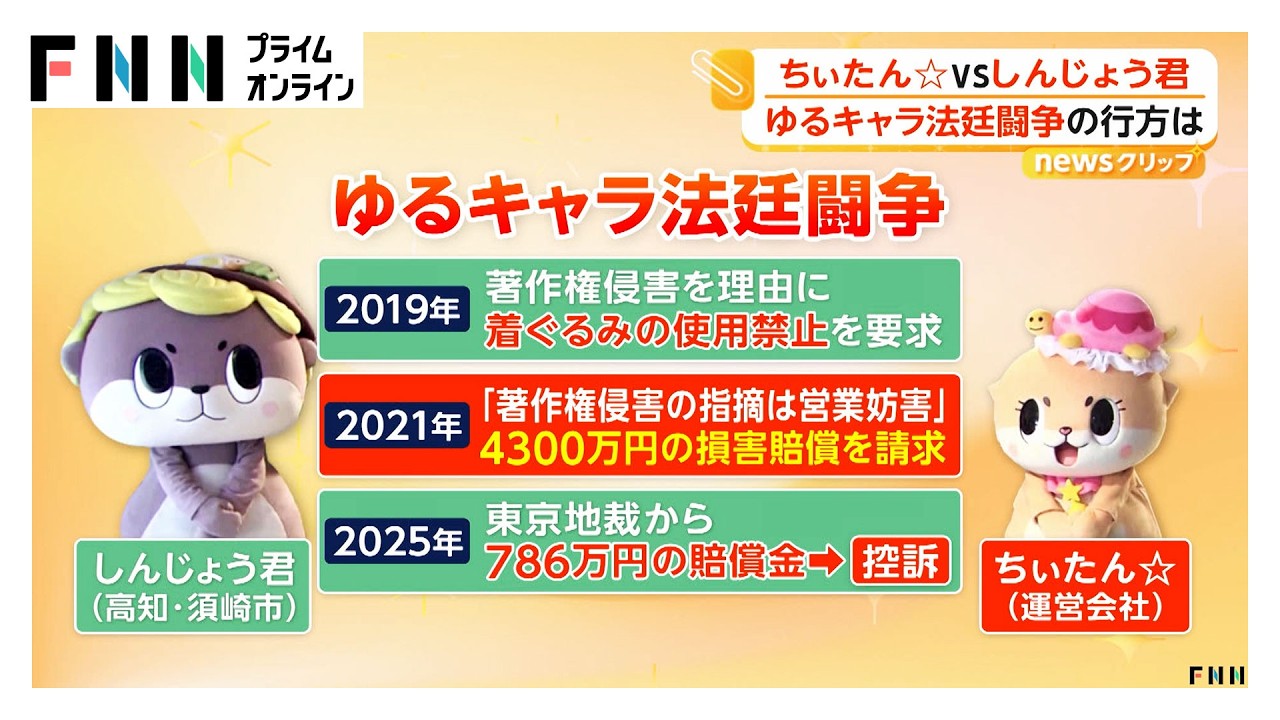
In 2019, the town filed a lawsuit towards the corporate working Chiitan, alleging copyright infringement involving Shinjo-kun and in search of, amongst different measures, a ban on using Chiitan costumes.
The dispute subsequently developed right into a broader authorized confrontation. In 2021, Chiitan’s operator filed a counterclaim in search of 43 million yen in damages, arguing that Susaki’s allegations of copyright infringement had prompted monetary losses.
The Tokyo District Court dominated in favor of Chiitan’s operator in 2025, ordering Susaki to pay 7.86 million yen in compensation. The metropolis challenged the choice and took the case to the Intellectual Property High Court.
On October 7, the Intellectual Property High Court elevated the compensation to 18.87 million yen, discovering that officers on the Susaki facet had acknowledged, when Chiitan was created, that the brand new character would resemble Shinjo-kun.
The ruling represented an additional setback for the town, which had initially sought to forestall using the rival mascot on copyright grounds.
However, Susaki introduced on October 21 that it had filed an attraction towards the newest choice, refusing to just accept the upper court docket’s judgment.
The dispute, which started with two mascots sharing the identical designer and showing collectively at public occasions, will now transfer to Japan’s Supreme Court, marking the newest growth in a authorized battle that has continued for greater than seven years.
Source: FNN