


TOKYO –
Japan’s rising variety of vacant houses has highlighted the difficulties households face in promoting inherited properties, prompting non-public firms and native governments to work collectively to repurpose undesirable homes in step with regional wants.
According to a survey by the Ministry of Internal Affairs and Communications, Japan had roughly 9 million vacant houses in 2023, accounting for a document 13.8% of all residential properties, or roughly one in each seven houses nationwide.
One issue behind the rise is the problem of disposing of household houses. Many individuals who inherit getting older properties wrestle to seek out patrons, leaving homes vacant even when their house owners are desperate to promote. A rising variety of firms are actually specializing in buying such hard-to-sell properties and discovering new makes use of for them.
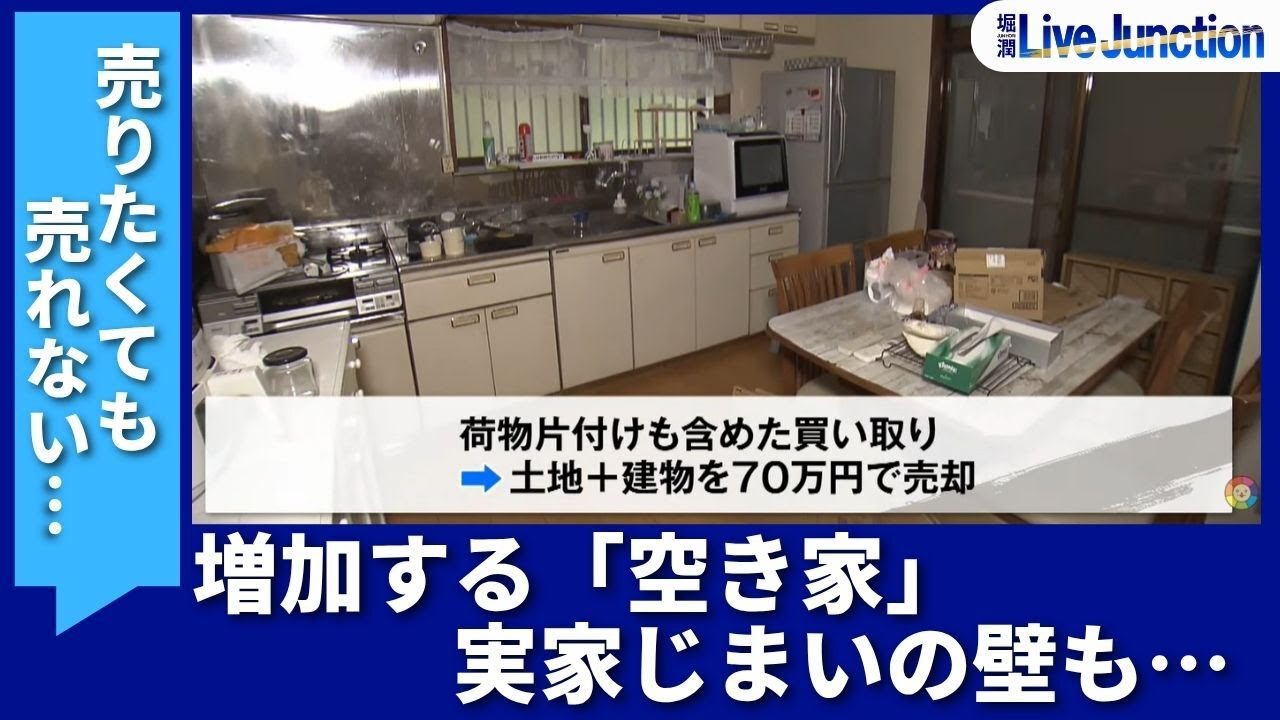
A 47-year-old, two-story home in Ome, western Tokyo, nonetheless accommodates furnishings and family home equipment left behind by three generations of a household who as soon as lived there: a grandmother, mom and daughter. The property has 4 bedrooms, a lounge, eating room and kitchen.
“Most of the belongings have now been cleared away, but the living room remained much as it was when the family spent time together,” stated a consultant of an actual property firm specializing in vacant houses.
A leak was found within the rest room plumbing in October, with restore prices estimated at between 2 million and three million yen. Faced with the monetary burden, the proprietor determined to promote the property.
However, along with being practically 50 years previous and requiring repairs, the home stands in entrance of a slope inside an space designated by the Tokyo metropolitan authorities as a particular sediment catastrophe warning zone, generally generally known as a pink zone. The mixture of getting older infrastructure and pure catastrophe dangers made discovering a purchaser significantly tough.
The proprietor ultimately bought the land and constructing for 700,000 yen to an organization that purchases undesirable properties and handles the removing of remaining family belongings. The property is predicted to be transferred to a different operator, which is contemplating placing it on the rental market.
New public-private initiatives are additionally underway to handle the rising variety of vacant houses which can be tough to promote, with municipalities looking for to repurpose properties in accordance with native demand.
In Shikama, Miyagi Prefecture, which attracts many vacationers however lacks lodging services, efforts are underway to buy vacant homes and convert them into lodging services.
Meanwhile, the city of Mori in Shizuoka Prefecture, which has 640 vacant houses, plans to renovate properties into trial lodging for folks contemplating relocation or dividing their time between two residences.
The president of the actual property firm specializing in vacant properties stated intervening earlier than homes are demolished may assist protect buildings which may in any other case be misplaced.
“By stepping in just before demolition, we create the possibility that someone might use the property again,” the president stated. “Vacant homes are often regarded as real estate liabilities, but I believe they can become community assets by bringing people back into them.”
Japan has undertaken a collection of main authorized reforms to make inherited properties simpler to promote, switch or relinquish, addressing longstanding issues in an inheritance system whose foundations date again to the Meiji period.
While Japan has by no means imposed a normal prohibition on promoting inherited houses, difficult possession preparations, voluntary property registration, taxation and upkeep obligations have traditionally discouraged the disposal of undesirable actual property.
These issues have change into more and more severe as Japan’s inhabitants ages and declines, with the variety of vacant houses reaching roughly 9 million in 2023, representing a document 13.8% of the nation’s housing stock.
Japan’s fashionable inheritance system originated with the Civil Code of 1898. Under the prewar family system, generally known as the “ie” system, household property was typically concentrated within the fingers of the family successor, usually the eldest son. The system was designed to protect household belongings and keep continuity throughout generations.
The postwar Constitution of 1947 established equality between women and men, resulting in a basic revision of the Civil Code that abolished the normal family succession system. The revised inheritance provisions took impact in January 1948, establishing particular person inheritance rights and extra equitable distribution of household belongings.
Although the reforms represented a serious advance in particular person rights, additionally they created the potential for fragmented property possession. A household house may cross to a number of kids, every buying an possession curiosity in the identical property.
Under present inheritance guidelines, when a deceased individual leaves a partner and youngsters, the partner typically receives half of the property, whereas the kids collectively inherit the remaining half, until a legitimate will or different lawful association supplies in any other case.
Selling a whole collectively owned property typically requires the consent of all its house owners. If one inheritor refuses to promote, can’t be contacted or dies earlier than the inheritance preparations are accomplished, disposing of the property can change into significantly extra difficult.
Over successive generations, a single home or parcel of land can purchase quite a few authorized house owners, a few of whom could have little data of the property or any connection to the group wherein it’s situated.
Japan launched inheritance tax in April 1905 to assist finance expenditures related to the Russo-Japanese War. The unique laws distinguished between succession to household property and unusual inheritance, reflecting the family construction of the time.
The inheritance tax system underwent main revisions in 1947, 1950 and 1958, steadily establishing the foundations of the current system. The reforms sought to redistribute wealth whereas permitting households to switch belongings between generations.
Another essential function of Japan’s authorized system was that inheritance registration remained voluntary for greater than a century. Although registration was typically mandatory to finish the switch of possession to a purchaser, heirs weren’t legally required to replace property data instantly after inheriting actual property.
As a consequence, households ceaselessly left properties registered beneath the names of deceased dad and mom or grandparents, significantly once they had no rapid intention of promoting or occupying the buildings.
During Japan’s postwar financial enlargement, rising land costs typically inspired households to retain inherited actual property. Property was extensively considered a safe long-term funding, and house owners typically anticipated land values to understand.
The authorities additionally launched preferential property tax preparations to encourage residential building. Under the system, the fastened asset tax evaluation base for residential land of as much as 200 sq. meters is lowered to one-sixth of its assessed worth.
While the measure inspired housing improvement, it will definitely created an unintended incentive for house owners to retain deserted buildings. Demolishing an previous home may end in a considerable enhance within the tax evaluation on the underlying land, even when the constructing itself had just about no market worth.
The collapse of Japan’s asset value bubble within the early Nineteen Nineties basically modified the economics of property possession. Land costs fell sharply in lots of areas, whereas inhabitants migration towards main cities weakened demand for rural housing.
Inherited properties that had as soon as represented useful household belongings more and more turned monetary liabilities, requiring house owners to pay property taxes, insurance coverage, upkeep and demolition prices with out producing revenue.
Japan’s inhabitants started declining after reaching its peak in 2008, additional accelerating the deterioration of regional housing markets. Children who had established careers and households in metropolitan areas typically had little curiosity in returning to their dad and mom’ hometowns.
The authorities started addressing the issue extra instantly with the enactment of the Vacant Houses Special Measures Act in November 2014, which got here absolutely into drive in May 2015.
The laws empowered municipalities to analyze vacant properties, determine house owners and intervene when deserted buildings posed dangers to public security, sanitation or the encircling setting.
Municipalities have been approved to advocate repairs or demolition, subject orders and, beneath sure circumstances, undertake demolition themselves and get better the prices from property house owners.
Related tax reforms additionally allowed authorities to withdraw preferential residential land tax remedy from significantly uncared for properties that turned topic to formal suggestions.
Meanwhile, vital inheritance tax reforms took impact in January 2015, decreasing the essential exemption from 50 million yen plus 10 million yen per statutory inheritor to 30 million yen plus 6 million yen per statutory inheritor.
For a household with three statutory heirs, the exemption consequently fell from 80 million yen to 48 million yen. The most inheritance tax fee was additionally raised from 50% to 55%.
The adjustments introduced extra households throughout the inheritance tax system, growing strain on some households to promote inherited actual property to lift funds. Inheritance tax typically have to be declared and paid inside 10 months of studying of the deceased individual’s dying.
In April 2016, the federal government launched a particular capital positive aspects tax deduction of as much as 30 million yen for the sale of qualifying inherited vacant houses.
The measure was designed to encourage heirs to get rid of properties earlier than they deteriorated or turned completely deserted.
Under the unique association, eligible homes typically needed to have been constructed on or earlier than May 31, 1981, earlier than Japan’s revised earthquake resistance requirements took impact. The deceased individual typically needed to have lived alone within the property earlier than their dying, and the constructing couldn’t be a condominium unit.
The sale value should not exceed 100 million yen, and the transaction typically have to be accomplished by December 31 of the third 12 months following the 12 months of inheritance.
The scheme was significantly essential as a result of Japan’s capital positive aspects tax system typically carries ahead the unique proprietor’s acquisition price and possession interval relatively than resetting the property’s acquisition worth on the time of inheritance.
When data of the unique buy value are unavailable, house owners can typically use 5% of the sale value because the acquisition price for tax calculation functions. This may end up in a considerable taxable achieve even when a property has fallen significantly in worth since its buy.
Japan additionally supplies a separate tax association permitting eligible heirs who’ve paid inheritance tax to include a part of that cost into the acquisition price when promoting inherited belongings inside a specified interval, typically three years and 10 months after the inheritance started.
In July 2018, Japan enacted its first main overhaul of inheritance legislation in practically 4 a long time, with most provisions taking impact in July 2019.
The reforms sought to handle the altering circumstances of Japanese households, significantly the growing variety of aged surviving spouses.
A brand new spousal residence proper launched in April 2020 allowed qualifying surviving spouses to proceed residing in a deceased associate’s house with out essentially buying full possession of the constructing.
The association separated residential rights from property possession, permitting surviving spouses to retain entry to housing whereas receiving a better portion of different belongings, comparable to financial savings. However, a longtime residence proper additionally must be thought-about when promoting the underlying property.
The authorities launched a system in July 2020 permitting handwritten wills to be saved at Legal Affairs Bureaus, decreasing the danger of paperwork being misplaced, destroyed or hid and serving to stop inheritance disputes.
One of essentially the most complete property legislation reforms in fashionable Japanese historical past was enacted in April 2021, when the Diet permitted amendments to the Civil Code and Real Property Registration Act, along with laws establishing a system for transferring undesirable inherited land to the nationwide authorities.
The reforms have been supposed to forestall the continued enlargement of land with unidentified or untraceable house owners, which had change into a serious impediment to infrastructure improvement, catastrophe reconstruction and regional revitalization.
Several provisions took impact in April 2023, together with new procedures permitting courts to facilitate sure transactions involving collectively owned property when some house owners can’t be recognized or situated.
Previously, the shortcoming to contact even one co-owner may stop the sale of a whole property. The revised laws created mechanisms via which courts may authorize the acquisition or switch of possession pursuits belonging to lacking co-owners beneath specified circumstances.
The reforms additionally launched property administration preparations permitting court-appointed managers to supervise land and buildings whose house owners are unknown or whose administration has change into insufficient.
Another modification established a normal 10-year restrict on claiming sure changes to statutory inheritance shares primarily based on circumstances comparable to substantial lifetime items or particular contributions to the deceased individual’s property.
The measure was designed to encourage households to settle inheritance preparations promptly relatively than permitting possession disputes to stay unresolved for many years. Exceptions and transitional preparations apply.
On April 27, 2023, Japan launched a system permitting folks to relinquish qualifying inherited land to the nationwide authorities.
Previously, people wishing to keep away from inheriting undesirable actual property typically needed to resign their whole inheritance via a household court docket inside three months of turning into conscious that they have been entitled to inherit, until an extension or different exception utilized.
Renouncing an inheritance meant surrendering rights to different belongings, together with financial savings and investments, relatively than merely rejecting an undesirable home or parcel of land.
The new system permits people to retain different inherited belongings whereas making use of to switch undesirable land to the nationwide authorities.
However, the eligibility circumstances are restrictive. Land containing buildings, disputed boundaries, mortgages, hazardous contamination or sure different administration issues could also be rejected.
Properties containing steep slopes that may require extreme administration expenditure might also be ineligible. Owners looking for to relinquish land occupied by an deserted home would typically need to demolish the constructing at their very own expense earlier than making use of.
Applicants should pay an examination charge of 14,000 yen per parcel, adopted, if permitted, by a contribution equal to roughly 10 years of land administration prices. The customary contribution is 200,000 yen for a lot of classes of land, though greater fees can apply.
In December 2023, revisions to the Vacant Houses Special Measures Act expanded the powers of native governments to intervene earlier than deserted buildings change into harmful.
The amended laws launched a class of inadequately managed vacant houses, permitting municipalities to subject steerage and proposals even when buildings had not but reached a sophisticated state of degradation.
Owners who fail to adjust to formal suggestions can lose preferential residential land tax remedy, growing the monetary incentive to keep up, promote, renovate or demolish their properties.
The laws additionally permits municipalities to designate areas the place the reuse of vacant houses is inspired and to facilitate conversions into business services, lodging and different makes use of via better regulatory flexibility.
In January 2024, the federal government relaxed the circumstances governing the particular capital positive aspects tax deduction for inherited vacant houses.
Previously, sellers typically needed to demolish an earthquake-vulnerable constructing or full the required structural enhancements earlier than promoting it.
Under the revised system, eligible patrons can undertake the demolition or earthquake resistance enhancements after the transaction, offered the work is accomplished by February 15 of the next 12 months.
The change reduces the upfront monetary burden on heirs who can not afford demolition or renovation prices earlier than promoting their properties.
However, when three or extra heirs purchase the related property via inheritance, the utmost deduction is lowered to twenty million yen per eligible inheritor. The particular tax measure is at the moment scheduled to stay out there for qualifying transactions via December 31, 2027.
An additional landmark reform took impact on April 1, 2024, making inheritance registration obligatory for the primary time.
Heirs are actually required to register inherited land and buildings inside three years of studying that they’ve acquired the property. Failure to conform and not using a professional motive may end up in a high quality of as much as 100,000 yen.
The requirement additionally applies retroactively to properties inherited earlier than the laws took impact. Owners who already knew they’d inherited unregistered properties earlier than April 2024 typically have till March 31, 2027, to finish the required registration.
A simplified declaration system was launched to permit particular person heirs to meet their preliminary registration obligations even when members of the family haven’t finalized the division of an property. However, this simplified process alone doesn’t set up the possession rights essential to promote the property.
On February 2, 2026, the federal government launched a nationwide system enabling people and eligible heirs to acquire certificates itemizing actual property registered beneath a selected individual’s identify.
The system is meant to assist households uncover inherited properties which may in any other case stay unidentified, significantly when deceased family members owned a number of parcels of land in several areas.
Mandatory registration of adjustments to property house owners’ names and addresses additionally took impact on April 1, 2026.
Registered house owners should now report such adjustments inside two years, with failure to conform and not using a professional motive probably leading to a high quality of as much as 50,000 yen. Changes made earlier than the laws took impact typically have to be registered by March 31, 2028.
Despite the intensive authorized reforms, the elemental problem dealing with many homeowners stays the absence of patrons.
In economically declining areas, demolition prices can exceed the market worth of the land, whereas getting older infrastructure, earthquake resistance necessities, restricted street entry and pure catastrophe dangers could make properties commercially unattractive.
The rising variety of firms specializing in buying undesirable inherited houses displays a shift in Japan’s property market. Rather than treating each home as an asset whose worth will recognize, these companies assess whether or not buildings could be economically renovated, rented, transformed into lodging or in any other case repurposed.
Source: TOKYO MX NEWS