


TOKYO –
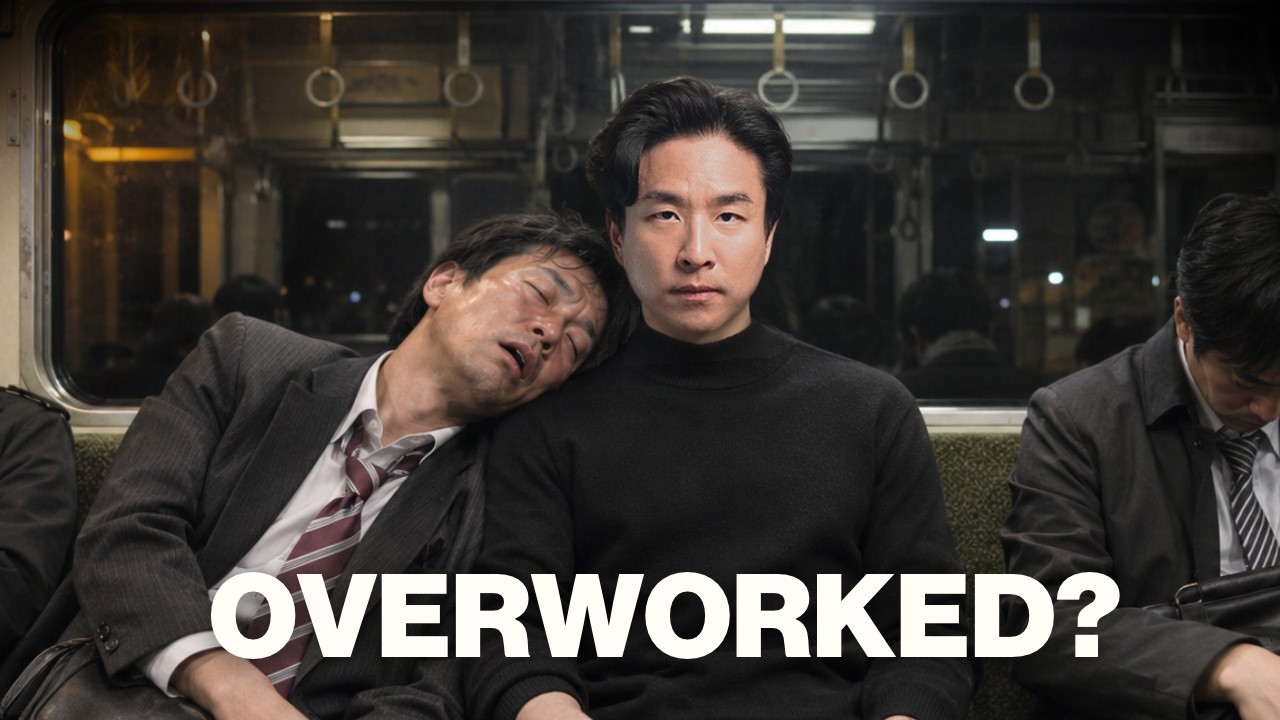
Recently, movies documenting the day by day lives of Japanese salarymen have been attracting tens of millions of views on YouTube. But why are these movies attracting so many viewers, particularly from the West? What is it about Japanese salarymen, in comparison with workplace staff in different Asian nations, that makes their lives so fascinating?
Japan’s notorious salaryman tradition, lengthy related to extreme working hours, company exploitation, low wages and demise from overwork, might not replicate the fact of working life within the nation. A documentary by Asian Boss Media challenges these deeply entrenched stereotypes, drawing on historic analysis, authorities statistics and employment surveys to look at how Japanese company tradition has developed and why worldwide audiences stay fascinated by the picture of the depressing Japanese workplace employee.
The time period salaryman emerged in Japan within the early twentieth century and have become common in the course of the Nineteen Twenties, when the nation was transitioning from an agricultural society into a contemporary industrial financial system. White-collar staff represented roughly 5% of the employed inhabitants and loved appreciable social status. Becoming a salaryman meant monetary safety, skilled respectability and membership in an rising center class.
During the Nineteen Twenties and Nineteen Thirties, Japanese firms started creating employment programs that rewarded long-term loyalty by means of common wage will increase, bonuses and worker advantages. Following World War II, steady company employment grew to become notably enticing to households rebuilding their lives.
Japan’s fast financial growth from the mid-Fifties strengthened the attraction of company careers. A 1970 survey reported by the Asahi Shimbun discovered that turning into a salaryman was the third hottest profession aspiration amongst Japanese boys, forward of turning into a physician or pilot.
For many staff, company loyalty represented a mutually useful association reasonably than exploitation. Workers loved monetary stability, profession development and a way of delight in contributing to Japan’s financial success.
During the Nineteen Eighties, American companies admired Japanese company tradition, finding out its administration practices, teamwork and productiveness. General Motors partnered with Toyota in 1984 to function a California car manufacturing facility utilizing Japanese administration strategies. By 1986, the manufacturing facility reportedly required roughly 20 hours of labor per car, in contrast with greater than 40 hours at a comparable General Motors facility.
Japan’s financial bubble collapsed within the early Nineteen Nineties, weakening employment safety and putting stress on wages. However, job satisfaction didn’t essentially collapse alongside the financial system.
Research by Recruit Management Solutions discovered that between 70% and 80% of Japanese staff reported job satisfaction between 1974 and 1992. Although satisfaction declined in the course of the subsequent financial downturn, it will definitely recovered.
A 1993 survey of practically 3,000 everlasting staff discovered that 66% had been glad with their employers, 65% felt hooked up to their firms and 57% had been pleased with them. However, solely 28% had been keen to sacrifice private pursuits for his or her employers, difficult the idea that Japanese staff unquestioningly prioritized company obligations over their personal lives.
Even in 2025, practically 70% of newly employed Japanese staff reportedly most popular remaining with one firm till retirement, suggesting that conventional employment stability continues to carry appreciable attraction.
Japan’s worldwide status for extreme working hours was considerably influenced by protection of karoshi, or demise from overwork.
The first documented case concerned Katsuyoshi Takeyabashi, a 29-year-old newspaper distribution worker who died from a mind hemorrhage in December 1969. Medical researchers subsequently recognized comparable instances, and a nationwide session hotline was established in 1988.
However, the documentary argues that worldwide reporting incessantly introduced particular person tragedies as consultant of Japanese working situations usually.
In 1989, Japan formally acknowledged 30 instances of work-related heart problems for staff’ compensation amongst greater than 61 million employed folks. In 2025, 67 deaths from work-related mind and cardiovascular ailments had been formally acknowledged amongst greater than 68 million staff.
Although these figures exclude probably unreported or unrecognized instances, the documentary argues that they problem perceptions of demise from overwork as a widespread incidence.
Western newspapers more and more lined karoshi from the late Nineteen Eighties, with the Chicago Tribune, New York Times and Washington Post publishing studies depicting Japan’s company tradition as exceptionally demanding. The time period entered the Oxford English Dictionary in 2002, additional cementing its worldwide affiliation with Japan.
However, up to date employment statistics reveal a considerable transformation in Japanese working hours.
In 2024, solely 4.7% of Japanese staff labored 60 hours or extra per week, whereas practically 86% labored not more than 48 hours.
According to OECD figures cited within the documentary, Japanese staff averaged 1,617 working hours yearly in 2024, in contrast with 1,796 hours within the United States, 1,865 hours in South Korea and an OECD common of 1,741 hours.
Japan’s annual working hours declined from 2,092 in 1988 to 1,884 in 1995 earlier than reaching 1,617 in 2024, a discount of roughly 23%.
Although nationwide averages embrace part-time staff and will not totally seize unpaid extra time, working hours amongst full-time staff have additionally declined.
Among Japanese clerical staff working a minimum of 40 hours per week, solely 4.9% labored 60 hours or extra in 2025.
The documentary additionally challenges assumptions about intoxicated businessmen sleeping on Tokyo’s streets. Rather than essentially being victims of extreme working hours, some might merely have consumed an excessive amount of alcohol and missed the final practice dwelling.
With most trains stopping between midnight and 1 a.m., staff face probably costly taxi journeys. A 15-kilometer late-night taxi journey can price roughly 8,000 yen, equal to roughly half a mean worker’s day by day pretax earnings.
Social media has in the meantime created what the documentary describes as a “misery business,” during which content material creators entice tens of millions of views by portraying Japanese company life as exceptionally oppressive.
One early viral video, uploaded in 2015, depicted a British worker working roughly 80 hours per week in Tokyo. However, the worker labored for worldwide accounting agency PwC throughout its busiest season, reasonably than representing a typical Japanese company worker.
Since 2025, more and more sensational movies depicting exhausted, depressed and financially determined salarymen have attracted substantial worldwide audiences, promoting income and donations. Questions have additionally emerged in regards to the authenticity of a few of these accounts.
Nevertheless, monetary pressures dealing with Japanese staff stay real. Regular staff earned a mean annual wage of roughly 5.59 million yen in 2025, together with bonuses and earlier than tax.
Between 2020 and 2025, client costs elevated by practically 12%, whereas meals costs rose by roughly 26%. Japan skilled 4 consecutive years of declining actual wages by means of 2025, leaving many households combating diminishing buying energy.
The documentary means that Western fascination with Japanese salaryman struggling might partly replicate dissatisfaction with viewers’ personal working lives. Watching supposedly worse situations abroad can present reassurance whereas reinforcing present adverse perceptions of company employment.
Another doable clarification is that audiences discover satisfaction in discovering shortcomings in a rustic in any other case admired for its security, cleanliness, environment friendly transportation and social order.
Ultimately, the documentary doesn’t deny that exploitation, extreme extra time and monetary hardship exist in Japan. Rather, it argues that distinctive instances, outdated perceptions and commercially motivated social media content material have obscured the numerous adjustments which have taken place in Japanese employment tradition over current many years.
Source: Asian Boss